


Description
Witham Viking Seax Knife
History of the Seax Knife
The scramseax,sometimes spelled scramsax, scramseaxe, scramaseax, scramasax, or scramaseaxe, and often simply called seax or sax,was a single-edged knife widely used among Germanic peoples. These blades ranged greatly in size, from small tools around 2.9 inches to large weapons extending up to nearly 30 inches. The longer versions, known as langseax, served primarily as weapons, while the smaller hadseax were everyday tools. Mid-sized seaxes could fulfill both roles. Carrying a scramseax was often a symbol of freeman status. It was traditionally worn horizontally at the front of the belt, allowing quick access. Linguistically, “scram” relates to food, and “seax” means blade,thus, the term can be understood as “food knife.” Some scholars argue that the name Saxons itself derives from this type of blade, much like the Franks were named for their francisca axes. Early Saxon heraldry also features depictions of scramaseaxes, underscoring their cultural significance.
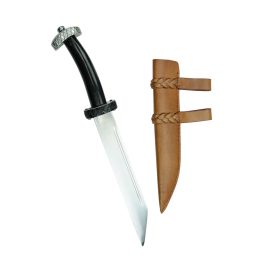
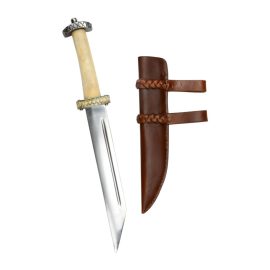
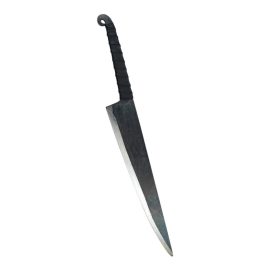
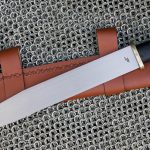
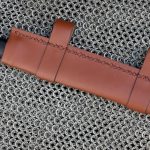
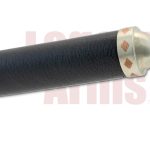
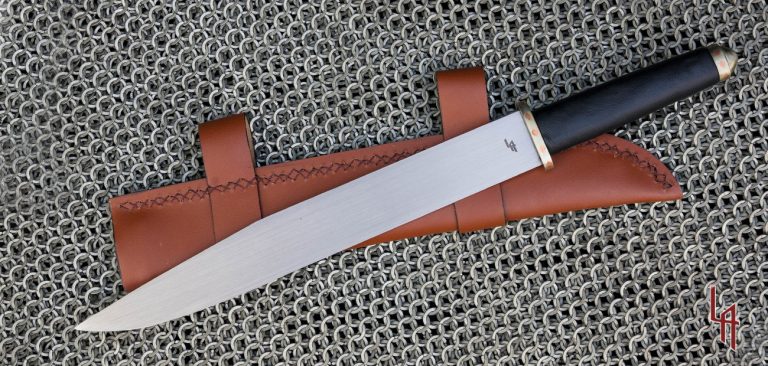
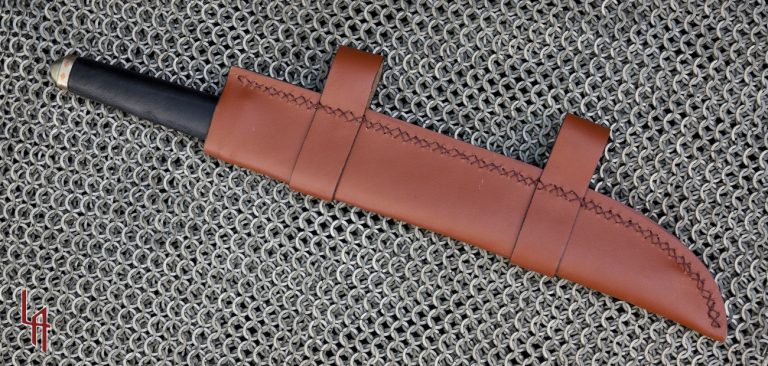
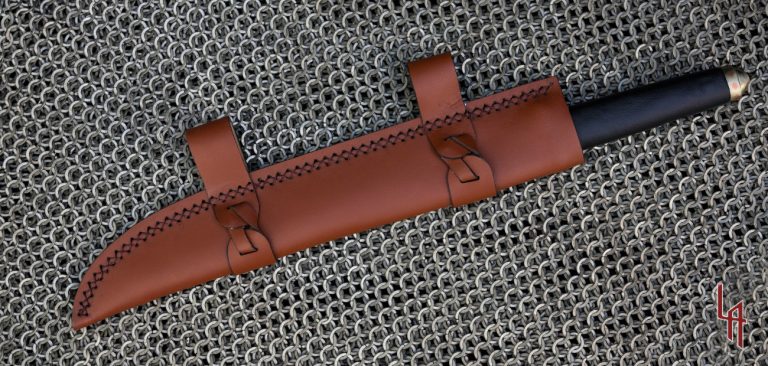
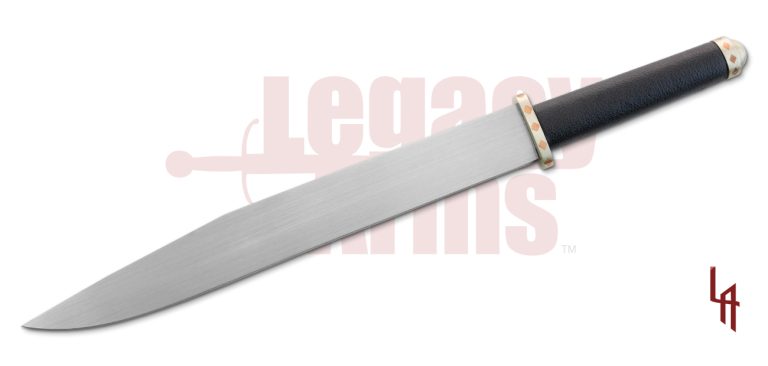
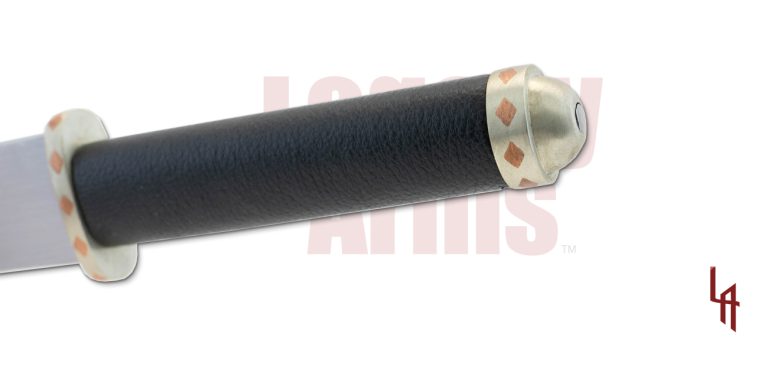
This modern interpretation draws from a 10th-century style, incorporating a slimmer leather-wrapped handle for improved grip. The blade is a robust 12 inches long and 5.5mm thick, forged from 5160 steel, known for its durability and edge retention. The tang extends through the handle and is peened over a metal end cap, securing the construction. Included is a brown stitched leather scabbard with a belt hanger, designed for practical carry and protection.
Key Features:
- Leather wrapped wood handle
- Peened tang construction
- Stitched leather scabbard with belt hanger included
Witham Viking Seax
Overall Length: 17 1/4″
Blade Length: 12″
Handle Length: 5″
Weight: 14 oz
Point of Balance: 2 1/2″ from guard
Width at Guard: 1 3/8″
Thickness at Guard: 5.5mm
Thickness at Tip: 1mm
Blade Steel: 5160
Specifications may vary slightly from piece to piece due to handcrafted nature.
Key Features:
- Leather wrapped wood handle
- Peened tang construction
- Stitched leather scabbard with belt hanger included
Witham Viking Seax
Fun Fact: The Witham Viking Seax is named after the Witham River in England, where several important Viking-era seax blades were discovered, shedding light on the weapon’s role in early medieval society.