
Description
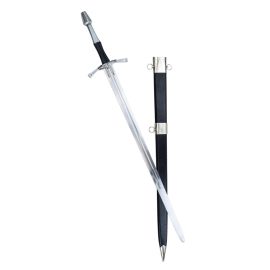
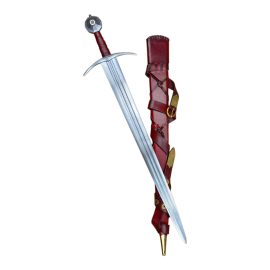
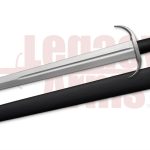
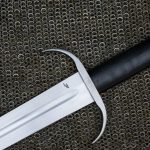
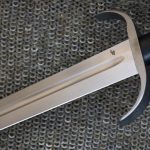
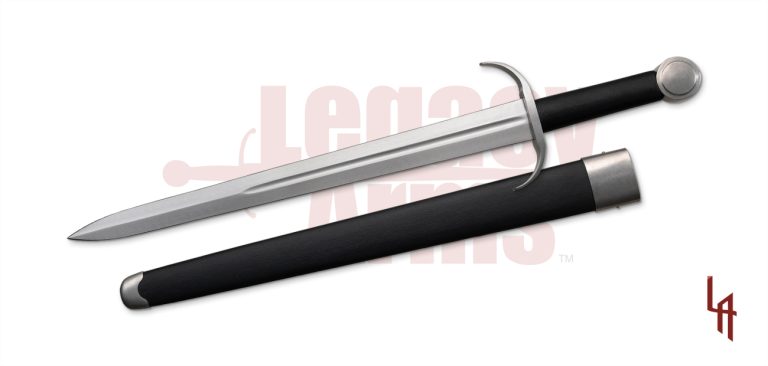
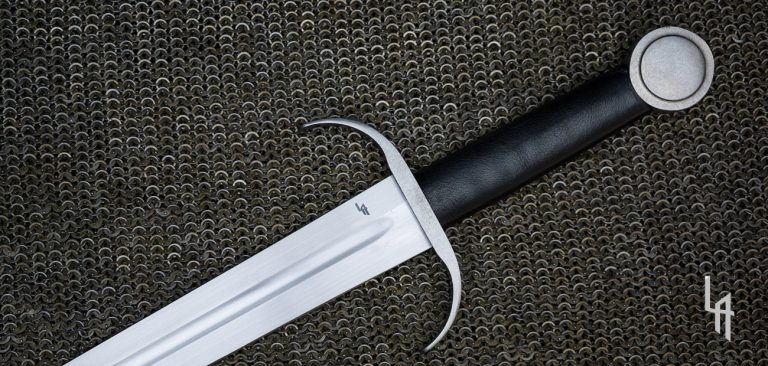
Legacy Arms Knight’s Riding Sword
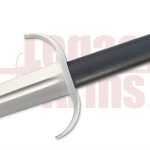
As documented in Ewart Oakeshott’s “Records of the Medieval Sword” (page 151), swords identical to this one appear on two early 14th-century German effigies: that of Arnold I Langraph of Cleve, who died in 1320 and is interred in the Stiftskirche at Cleve, and a heroic figure dating to around 1308 in the Rathaus at Cologne. The hilts and dimensions of these swords match this example precisely, underscoring that these compact swords were intended for knights and high-ranking nobles,not for youths or archers as sometimes assumed.
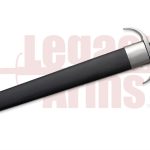
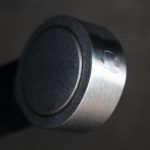
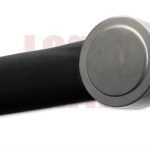
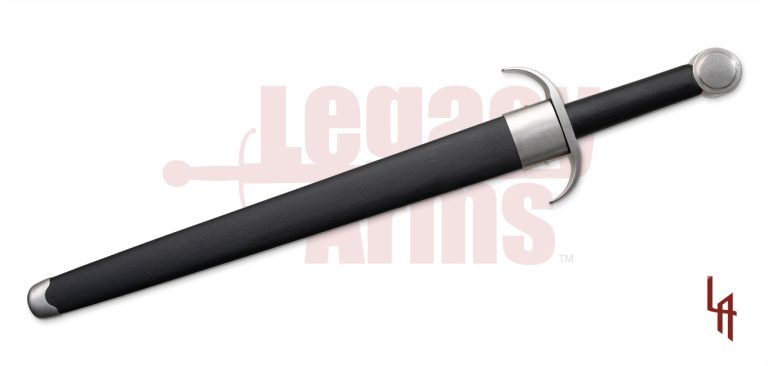
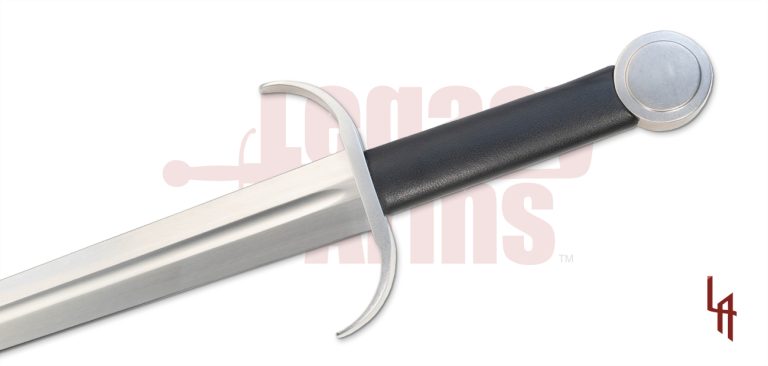
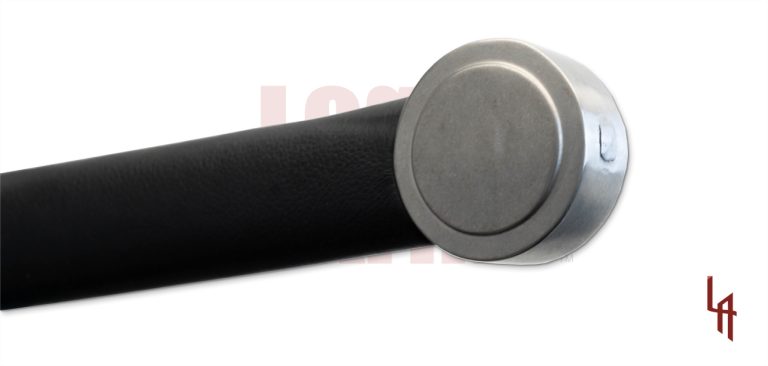
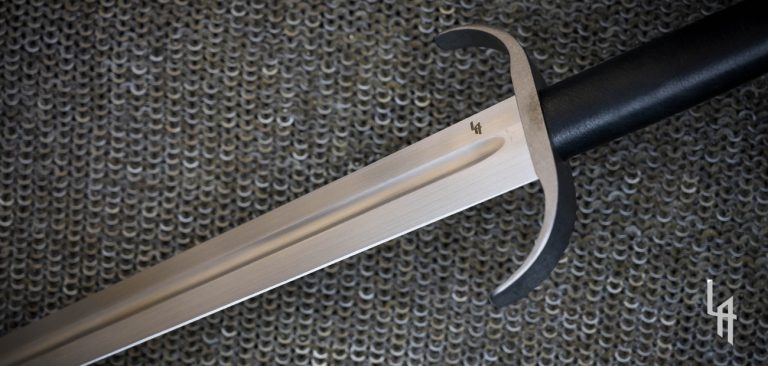
The blade is hand-forged from 5160 carbon steel, a tough spring steel favored for its balance of hardness and flexibility. After forging, the blade undergoes hand tempering to achieve the proper resilience needed for combat. The blade is securely peened to the pommel, ensuring a solid construction. The handle is crafted from wood and wrapped in black leather to provide a firm grip. Accompanying the sword is a wooden scabbard, also wrapped in black leather, with steel fittings at the throat and tip to protect the blade and aid in carrying.
Key Features:
- 21″ blade forged from 5160 spring steel
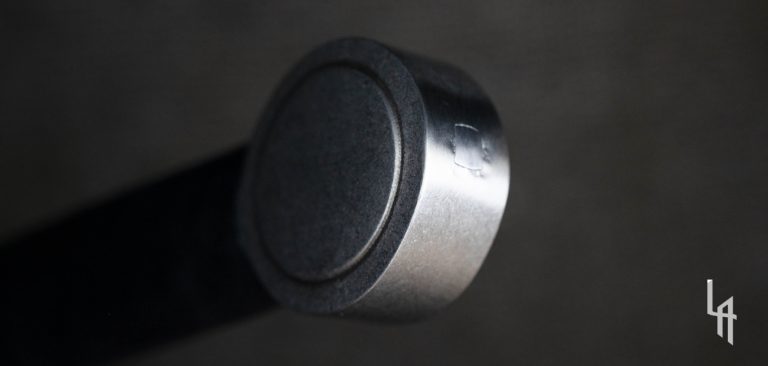
- Matte-finished steel guard and pommel
- Leather-covered wooden scabbard with steel fittings
Knight’s Riding Sword
Overall Length: 28 1/2″
Blade Length: 21″
Handle Length: 5 1/5″
Weight: 2 lbs 4 oz
Width at Guard: 1.9″
Width at Tip: 1″
Thickness at Guard: 6mm
Thickness at Tip: 3.5mm
Blade Steel: 5160 spring steel
Please note, slight variations may occur between individual pieces.
Fun fact: The Knight’s Riding Sword was designed to be compact enough for use on horseback, allowing knights to wield it effectively in the close quarters of mounted combat while still delivering powerful cutting and thrusting strikes.